

Youth Protection in the Digital Age
Young people today live in a fully digital environment where online interactions, gaming, and social media are a natural part of daily life. These spaces open new opportunities for learning, creativity, and global connection—but they also bring real risks.
Cyberbullying, identity theft, online fraud, and misuse of personal data are among the growing challenges faced by youth. Protecting them requires a structured approach based on recognition of risks, proposing practical solutions, and building strong education programs.
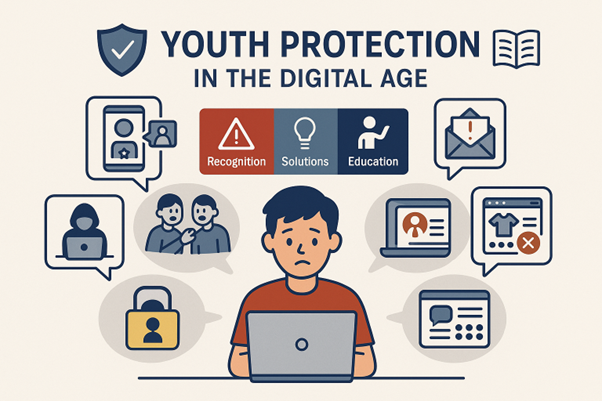
Our Approach: 3 Pillars
- Recognition
We identify the digital and identity-related risks that youth face in online spaces, including cyberbullying, fake accounts, fraud, and misuse of personal information. - Solutions
We provide practical measures such as anonymization tools, safe communication platforms, stronger parental guidance, and digital identity protection frameworks to reduce risks. - Education
We empower youth through interactive workshops, real-life case studies, and awareness campaigns. Education ensures they understand how to act responsibly, protect their data, and recognize fraud before it harms them.
Scenarios of Bullying and Fraud
- Fake Social Media Profiles
A teenager discovers that someone has stolen their pictures and created a fake social media account in their name. The impersonator uses the account to spread rumors, send offensive messages, and damage the teen’s reputation. Friends and classmates are confused and may believe the fake posts are real. This creates both emotional distress and social isolation for the victim. If not addressed quickly, such impersonation can also escalate into identity fraud.
- Online Gaming Harassment
During multiplayer online games, young players can become targets of coordinated bullying. Groups may gang up to insult, exclude, or repeatedly attack one specific player, making the gaming experience toxic. The victim feels powerless, anxious, and may stop participating in activities they once enjoyed. In some cases, bullies even extend their harassment to social media or school environments. Over time, this behavior can seriously affect self-confidence and social development.
- Phishing Messages
Youth often receive messages that look like they come from teachers, schools, or popular platforms. These messages ask them to “verify” their accounts or provide login details. Because the messages look official, many fall into the trap and share sensitive information. The stolen accounts are then used to scam friends or spread harmful content. Such fraud can cause both emotional harm and long-term privacy risks.
- Revenge Sharing of Private Images
A teenager shares a private image with someone they trust, only to see it later spread across group chats or social media after a conflict. This form of cyber abuse causes humiliation, shame, and in extreme cases, blackmail. The victim may withdraw from friends and even avoid school out of fear of judgment. Beyond emotional harm, this misuse of private content can also lead to legal consequences. Education about consent and digital responsibility is essential to prevent such cases.
- Online Shopping Fraud
Young people are often tempted by “too good to be true” online offers. They may order sneakers, headphones, or game credits from unverified sites, only to never receive the items. In addition to losing money, they risk exposing their bank details or debit card information. This type of fraud teaches youth a painful lesson about trust in digital commerce. Guidance from parents and safe-payment awareness can reduce these risks.
- Identity Misuse for Loans or Services
Fraudsters may obtain basic personal information of young people—such as name, address, or ID number—through hacked accounts or leaked databases. They then use this information to open fake accounts, register for services, or even request loans. The victim often discovers the problem years later, when trying to open a bank account or apply for services. Such cases can create long-term legal and financial complications. Protecting digital identity early is therefore crucial.
- Cyberbullying in Group Chats
Students may create group chats or private online communities where one person is targeted for ridicule or exclusion. They post hurtful comments, jokes, or edited images designed to embarrass the victim. Unlike traditional bullying, online abuse follows the victim everywhere, 24/7, with no safe space to escape. This constant exposure can lead to anxiety, depression, and a deep sense of loneliness. Teachers, parents, and peers must learn to recognize signs and intervene early.
Conclusion
Youth protection in the digital era is not just a technical issue—it is a social responsibility. By recognizing risks, offering concrete solutions, and prioritizing education, we will try to create a safe digital environment where young people grow up protected, aware, and empowered.